"Will all great Neptune's ocean wash this blood/Clean from my hand? No, this my hand will rather/The multitudinous seas incarnadine, /Making the green one red." (2.2. 60-63) Macbeth, the great King of Scotland, committed an unforgivable deed, murder. He will never be able to take back his actions, or "wash" the guilt away and purify himself. As Shakespeare demonstrates in his insightful plays, one who commits an act of sin will forever pay for their actions, including their loved ones. The suffering Macbeth experiences would be considered karma, the principle of justice that determines a person's state of life as the effect of their past deeds. Macbeth's thoughts and emotions haunt him, and eventually drive him to the point of insanity and numbness, provoking him to continue to commit harmful acts. The stages of Macbeth’s devastating downfall as a tragic hero are the establishment of his power and character flaw, the reversal of his fortune, and catharsis and restoration of social order.
To begin, the first stage of Macbeth’s devastating downfall as a tragic hero is the establishment of his power and character flaw. Macbeth is a very prominent person throughout Scotland, with both the royal family and the villagers. The admiration towards Macbeth does not go unnoticed by the King, therefore, when the Thane of Cawdor is murdered for his evil ways, Macbeth is well deserving of the honourable title. King Duncan proudly stated that "What he [Thane of Cawdor] hath lost noble Macbeth hath won" (1.3.69). Macbeth may not realize it himself, but he has the King and the people of Scotland under his charming spell. Now that Macbeth has had a glimpse of what his life could potentially be like as King, he is driven to achieve a higher royal title. The strong ambition behind Macbeth’s actions appears innocent, but will soon be proven to be fallacious: "The Prince of Cumberland! That is a step/ On which I must fall down, or else o’er-leap, / For in my way it lies. Stars, hide your fires! / Let not light see my black and deep desires" (1.4.48). Through personification, Macbeth’s flaw, a deadly drive, is now becoming noticeable. He is still thought to be an honourable man, but his determination is slowly becoming stronger. Also, when Macbeth and Banquo come across the three old witches, they predict to the men that Macbeth will become King, and Banquo’s sons are also in line for the throne. Macbeth’s lifelong dream is now almost within grasp, and he will do whatever it takes to gain the title of King. Macbeth voices his master plan to Lady Macbeth, "My dearest love, /Duncan comes here tonight... O never/ Shall sun that morrow see!" (1.5.58-60). Lady Macbeth, Macbeth’s wife, has the same driven determination as her husband: "To beguile the time, / Look like the time; bear welcome in your eye, / Your hand, your tongue: look like the innocent/ flower/ But be the serpent under’t" (1.5.63-65). Macbeth does consider that killing King Duncan is wrong, but his drive is too strong for him to ignore. The goal that Macbeth has set for himself, which is to become King, is very unrealistic in terms of occurring naturally, but his ambition is deadly, which creates a fatal flaw for himself. Thus, the first stage of Macbeth’s devastating downfall as a tragic hero is the establishment of his power and character flaw.
Next, the second stage of Macbeth’s devastating downfall as a tragic hero is the reversal of his fortune. Macbeth turns his murderous plan into reality during King Duncan’s stay at his castle by murdering him in his sleep: "I have done the deed" (2.2.15). Lady Macbeth offered her husband words of advice: "These deeds must not be thought/ After these ways; so, it will make us mad" (2.2.33-34). This act of murder demonstrates Macbeth’s devastating flaw as a tragic hero. After the deed was committed, guilt and paranoia overwhelm Macbeth thoughts. Even though he has now gained the title of King, he is still not content: "They hail’d him [Banquo] father to a line of Kings. / Upon my head they plac’d a fruitless crown" (3.1.60-61). Macbeth’s insecurity is proven effectively through this metaphor. In order to solve Macbeth’s predicament, he decides to eliminate the possibility of Banquo’s sons becoming royalty by having them killed: "Fleance is scap’d/... but Banquo’s safe? / Ay, my good lord; safe in a ditch he bides,/ With twenty trenched gashes on his head" (3.4.20-27). At this point in time, Macbeth is beginning to lose all sense of reality, all in order to secure his kingship. Even though Macbeth has successfully accomplished his goal of being King, he cannot even enjoy it with all of the nightmares and hallucinations he is having due to his overwhelming paranoia. Macbeth encounters the three witches for a second time, and they tell him three prophecies related to the security of his kingship. He learns that he must be aware of Macduff, for he may cause Macbeth to lose his crown. Again, he creates a master plan to further himself. To intimidate Macduff and prove that he does not fear him, he takes action against Macduff’s family: "Your castle is supris’d; your wife and babes/ Savagely slaughter’d; to relate the manner/ Were, on the quarry of these murder’d deer,/ To add the death of you" (4.3.204-207).Macbeth’s fatal flaw of deadly determination is overtaking his life, and is causing himself much remorse and regret. Therefore, the second stage of Macbeth’s devastating downfall as a tragic hero is the reversal of his fortune.
Finally, the third stage of Macbeth’s devastating downfall as a tragic hero is the catharsis and restoration of social order. Macbeth has selfishly taken many innocent villagers lives, all to better himself, which in turn negatively affects Scotland, for their King is a murderer. Many citizens are starting to see that their King’s motives are not as pure and innocent as they thought. They know they need to stop his murderous rampage before more lives are lost. An army of 10 000 men, led by Malcolm and Siward, plan on killing Macbeth for betraying the Kingdom: "The English power is near, led on my Malcolm/ His uncle Siward, and the good Macduff./ Revenges burn in them" (5.2.1-3). Through a metaphor, it is demonstrated that the men’s wants for revenge is deadly, and burns inside them almost like a fire. Macbeth is finally to be murdered, which is what he deserves. Once the army invades Macbeth’s castle, Macduff successfully beheads the King: "Behold, where stands/ The usurper’s cursed head/... Hail, King of Scotland!" (5.7.83-88). As one can see, Macbeth’s single devastating character flaw, ambition, overtakes who he is, and what his morals are. Now that the King has been beheaded, relief is among the people of Scotland. Malcolm is then rightfully crowned King: "We will perform in measure, time, and place. / So, thanks to all at once, and to each one, / Whom we invite to see us crown’d at Scone" (5.7.102-104). Malcolm has brought harmony back to Scotland, which allows the innocent exiled people to return to their homeland. In summary, the third stage of Macbeth’s devastating downfall as a tragic hero is the catharsis and restoration of social order.
Overall, the stages of Macbeth’s devastating downfall as a tragic hero are the establishment of his power and character flaw, the reversal of his fortune, and catharsis and restoration of social order. A man named Tryon Edwards once said, "Thoughts lead on to purposes; purposes go forth in action; actions form habits; habits decide character; and character fixes our destiny." The actions and decisions that are made daily are that most important components in terms of shaping a character and destiny. Always think before acting, and evaluate how an action will make others think or feel, for karma is not always kind. Knowing the distinct difference between right and wrong will be a strong influence on decision making: "It's not hard to make decisions when you know what your values are" (Roy Disney).
Friday, May 6, 2011

Tuesday, April 12, 2011
jacqueline martin as president
President, one appointed or elected to preside over an organized body of people, such as an assembly or meeting. This is the "boring" way of describing what a president does. But if you know me, Jacqueline Martin, you will know I'm not the boring type. A president is a person elected that will change the student body for the better while making it fun and exciting for their peers. I know that I am suitable for this position because I can meet the needs of the student body and is willing to bring in new ideas. I am an enthusiastic person with a lot of energy who can get the job done.
As my friend Borat always says...
"I like you very much!"
This is something you will be saying if you vote me, Jacqueline Martin, president of 2011- 2012.
As my friend Borat always says...
"I like you very much!"
This is something you will be saying if you vote me, Jacqueline Martin, president of 2011- 2012.
Sunday, April 3, 2011
Siegfried Sassoon
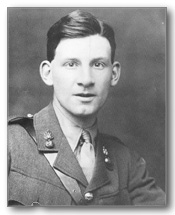
I found him in the guard-room at the Base.
From the blind darkness I had heard his crying
And blundered in. With puzzled, patient face
A sergeant watched him; it was no good trying
To stop it; for he howled and beat his chest.
And, all because his brother had gone west,
Raved at the bleeding war; his rampant grief
Moaned, shouted, sobbed, and choked, while he was kneeling
Half-naked on the floor. In my belief
Such men have lost all patriotic feeling.
Reading this poem I get the feeling of sadness. The more I read into the poem and feel what Siegfried is trying to write about, I start to feel that he is writing about a hostage that they took to the base. Throughout the reading you can tell that this person who has been put in the guard-room is hurt inside and wants to get out. You can feel that this person is someone who obviously didn’t deserve to be there. I researched a guard- room for World War 1 and this is a picture I found that would show somewhat good description of one.

I noticed that there is some light shining in from the left side of the photo; this tells me that it is not a room and that nobody can see or some sort of private room. It obviously is not a happy environment place to be in, more of a boring one to be in. I notice that there are maps on the board. This is showing me that this room is where the guard would stay and be in control of the base, the maps represent the building and where everything is. Half way through the poem, it talks about how the man is very uncomfortable there and is very upset. However, the last line talks about the man losing all patriotic feelings. When I researched what that meant, I learned that patriotism means that a person has great feelings for their own country (I soon realized that I did know what patriotism was). This tells me that this man is not impressed with his country and doesn’t want to have anything to do with it.
Friday, April 1, 2011
Tuesday, March 8, 2011
Jacqueline is RICH !
Somehow, I feel lost writing this essay. Questions that run through my brain at the moment are, "Aline lived in a different time period, therefore $8 is a lot for her because she is not so wealthy, therefore I can't really connect to her." Or something like, "I go tot he movies when I want, ride in cabs almost every weekend and listen to music on my own personal electronic device." When the question is asked to me, "Write a 500 word personal essay about yourself talking about how you are rich in some way like Aline." I think to myself that there is no relation to waking up with $8 and thinking that was so much money, but I can connect in some way that I am very rich for having family and friends.
As you may know, my brother was in a tragic accident three months ago. Throughout this process I immediatly realize that I needed my friends and family's support throughout this long process. From cards, cafeteria food and preyers we were blessed enough to find out that Ben was full steam ahead to recovery. The recovery time was supposed ti be long but Ben has been strong and I can't believe how fast he had recovered The connection to being rich for a day with this story might be a question popping in your head right now, but I feel very rich to have my brother here with us.
Change can happen in a snap of the fingers, a blink of an eye or whatever you like to day, but a miracle can also happen that quickly as well. I feel that I am the richest girl in the world and, since this happened, I can see a difference in my brother's and my relationship, and that's something I wouldn't change. Everyone is rich in some way and this is the way I am rich in.
Friday, February 18, 2011

The Lottery Ticket
Q: What is the difference in the husbands reaction in the starting of the story to towards the end?
A: The husband really could care less about the lottery at the starting of the story, but once he realizes that he had won the lottery that all changed. His wife, who obviously buys the lottery tickets, was wondering if her could check the numbers for the ticket. The husband is not at all interested and looks at the numbers, little does he know that these number could have changed his life. Looking at the numbers, they all appear to match together and the husbands views on the lottery totally change. He jumps to conclusions and a whole bunch of thoughts are going through his brain and he is getting all excited. You can tell that in the starting of the story his mood is gloomy about the lottery but towards the middle of the story it takes a complete turn and he is so excited about winning the lottery and is jumping to conclusions. Little does he know, that one number is wrong and his mood is going to jump back being gloomy, maybe even worse.
Q: Do you believe the story has taken place in the year it was written?
Q: Do you think that husband will become depressed now that he has figured he doesn't win the lottery? Do you think that his bi-lottery feel with be more intense?
Subscribe to:
Posts (Atom)